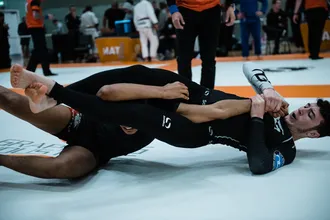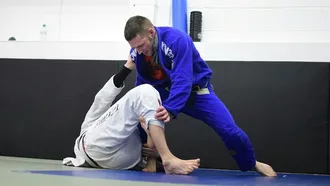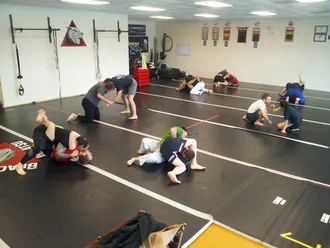
Brazilian Jiu-Jitsu is one of the fastest-growing martial arts in the world, and for good reason. It builds confidence, teaches real self-defense, and creates a community unlike any other sport. But if you've ever watched a BJJ class or scrolled through social media clips, you've probably wondered: is it actually hard to learn?
Yes, it's hard. Most people spend their first few months getting squashed by someone half their size and wondering what just happened. "Hard" doesn't mean "not for you," though. Below is why beginners struggle, what each stage feels like, and how to make the learning curve work in your favor.
Why BJJ Feels So Hard at First
Almost every white belt goes through the same experience in their first few months. Understanding why it feels so difficult can help you push through instead of giving up.
The Ego Problem
This is the biggest hurdle for most people, and it has nothing to do with fitness. In BJJ, a 60 kg purple belt can control and submit a 100 kg athlete who has never trained. Technique, timing, and leverage beat raw strength every time. That's the beauty of the art, but it can be a shock to the ego when you're on the receiving end.
The culture around this is simple: "check your ego at the door." Everyone on the mat got tapped out hundreds of times to get where they are. The sooner you accept that losing is learning, the faster you'll progress.
Unnatural Movements
Humans are built to walk upright. BJJ asks you to fight from your back, move your hips in ways you've never experienced, and stay calm while someone is on top of you. Movements like shrimping (hip escapes), bridging, and technical stand-ups feel completely foreign at first. Your brain has no reference point for any of it.
Think of it like learning to ride a bike. It feels impossible until it suddenly doesn't. Most students find that basic movements start to feel natural around the 3 to 4 month mark.
Information Overload
BJJ has hundreds of techniques, plus endless variations, spread across dozens of positions. In a single class, you might learn a sweep, an escape, and a submission. By the following week, you've forgotten half of it. This is completely normal. In the early months, you're not expected to remember everything. You're building a foundation of body awareness and movement patterns that will make techniques stick later.
As practitioners like to say: "trust the process."
Month-by-Month Progress Timeline
One of the hardest parts of starting BJJ is not knowing what "normal" progress looks like. This is roughly what most beginners go through:
| Stage | How It Feels | What You Can Do |
|---|---|---|
| Month 1 | Overwhelming. You don't know any positions, and everything is confusing. | You know the names of a few positions. You can tap safely. |
| Month 3 | Still hard, but less chaotic. You recognize patterns during rolls. | Basic escapes from mount and side control. You can do a few sweeps from guard. |
| Month 6 | The "aha" moment. Techniques start connecting. You're surviving longer. | You can hold positions, attempt submissions, and defend more intelligently. |
| Month 12 | Confidence builds. You're catching newer students and challenging peers. | Multiple attacks from your favorite positions. You have a "game" developing. |
| Month 24 | You feel competent. Blue belt is within reach or already earned. | Chaining techniques together. You can roll with anyone safely and hold your own against most white belts. |
Keep in mind that progress isn't linear. Plateaus are normal, especially around 6 to 8 months. Almost everyone hits a phase where they feel like they've stopped improving. You haven't. This is also the stretch where a lot of people quit BJJ, so expect it and push through. The mat doesn't lie.
BJJ vs Other Martial Arts: How Hard Is It Really?
People often ask whether BJJ is harder than other martial arts. The answer depends on what kind of "hard" you mean:
| Martial Art | Physical Entry Barrier | Learning Curve | Time to Basic Competence | Time to Black Belt |
|---|---|---|---|---|
| BJJ | Low (leverage-based) | Steep, then gradual | 6 months | 10 to 15 years |
| Boxing | Moderate (cardio-heavy) | Moderate | 3 months | N/A (no belt system) |
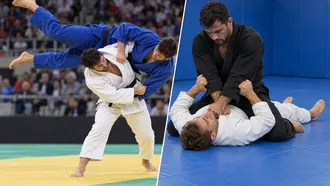
| Judo | High (throws, impact) | Steep | 6 months | 5 to 8 years |
| Wrestling | High (explosive, cardio) | Steep | 4 months | N/A (competitive sport) |
| Muay Thai | Moderate (striking, conditioning) | Moderate | 4 months | N/A (grading varies) |
The key difference: BJJ has the longest learning curve but the lowest physical barrier to entry. You don't need to be fast, strong, or in great shape to start. Technique beats strength. That's what makes it "the gentle art."
What Makes BJJ Accessible to Anyone
Despite the difficulty, BJJ is one of the most inclusive martial arts on the planet. A few reasons:
- No prior experience required. Every gym has a fundamentals program designed for day-one beginners. You don't need a martial arts background.
- Technique over strength. The entire system is built on leverage, angles, and body mechanics. A smaller person using proper technique can control a much larger opponent. Hélio Gracie, the smallest and frailest of the Gracie brothers, shaped the Brazilian version of the art around exactly that idea.
- You train at your own pace. At most academies, sparring (called "rolling") is optional in your first weeks. You can drill techniques and build confidence before live training.
- The community is genuinely welcoming. BJJ culture runs on mutual respect. Everyone on the mat was a clueless white belt once, and most people love helping beginners because someone helped them too.
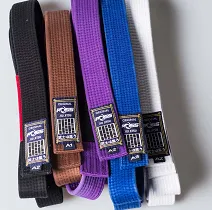
- Progress is measurable. The belt system and stripe promotions give you clear milestones so you can see how far you've come.
If you're not sure where to begin, find a BJJ gym near you and try a trial class. Most academies offer your first session free.
What to Expect in Your First BJJ Class
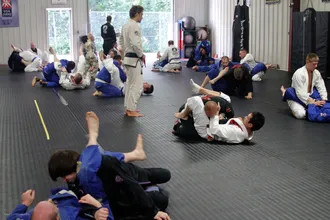
Not knowing what to expect is one of the biggest reasons people hesitate. This is how a typical first class runs:
- Arrive early (10 to 15 minutes). You'll sign a waiver, tour the gym, and meet the instructor. Wear comfortable athletic clothing if you don't have a Gi yet. Many gyms lend one for your trial.
- Warm-up (10 to 15 minutes). Light jogging, stretching, and BJJ-specific drills like shrimping and forward rolls. It will feel awkward. That's expected.
- Technique instruction (20 to 30 minutes). The instructor demonstrates 2 to 3 techniques. You pair up with a partner and practice them step by step. Partners are usually assigned so beginners work with experienced students who can guide you.
- Positional drilling (10 to 15 minutes). You practice the techniques with light resistance. This bridges the gap between drilling and live sparring.
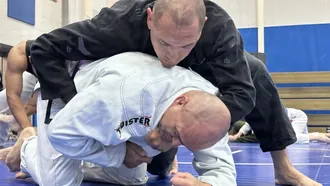
- Rolling/sparring (optional, 15 to 20 minutes). Live grappling rounds, usually 5 minutes each. As a beginner, you may sit out, watch, or do a light "flow roll" with an upper belt who will go easy.
- Cool-down and questions. Class ends with stretching. This is a great time to ask the instructor or training partners anything.
Every academy runs its own version, but what a BJJ class is actually like rarely strays far from this outline.
Tips That Actually Help (Not Just "Show Up")
Every beginner guide says "just be consistent." That's true, but it's not enough. Here are specific, actionable things that will make your first year easier:
Focus on Survival, Not Submissions
Your only job for the first 3 months is to not get submitted as quickly. Don't worry about catching anyone. Focus on maintaining your guard, escaping bad positions, and protecting your neck. If you survive for 30 seconds longer this week than last week, that's real progress. Position before submission.
Train at Least Twice a Week
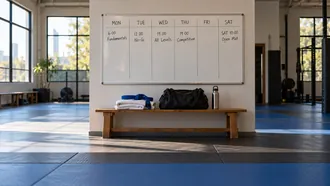
Once a week isn't enough to build muscle memory. Twice a week is the minimum for your body and brain to retain what you've learned. Training BJJ three times a week is ideal if your body can handle it. If fitting two sessions around work and kids is the hard part, these sample BJJ training schedules show how real people make it work.
Write Down One Thing After Each Class
Before you leave the gym, write down one technique or concept you learned that day. It doesn't need to be detailed. Just the name and a one-sentence description. Over a few months, you'll have a personal playbook that makes reviewing much easier.
Roll with Higher Belts
It sounds counterintuitive, but rolling with higher belts is the safest and most educational experience you can have. They'll control the pace, let you work, and won't smash you. Rolling with other white belts can actually be more chaotic and injury-prone because neither person has control yet.
Signs You're Improving (Even When It Doesn't Feel Like It)
One of the most frustrating things about BJJ is that progress is invisible for long stretches. You'll feel like you're getting nowhere, then suddenly realize you're doing things that seemed impossible a month ago. Here are the signs to watch for:
- You survive longer. Getting submitted in 30 seconds instead of 10 seconds is genuine improvement.
- You recognize positions. You can name the position you're in (side control, half guard, mount) without thinking about it.
- You move without thinking. Shrimping, bridging, and framing become reflexive instead of deliberate.
- You escape positions you used to get stuck in. That mount escape you drilled 200 times finally works in a live roll.
- New white belts feel like you did on day one. When someone brand new joins and you can control them, you realize how far you've come.
- You start asking better questions. Instead of "what do I do here?" you ask "should I go for the underhook or the frame in this situation?"
In BJJ, we say you either win or learn. There's no losing if you're paying attention.
When Does BJJ Start to Click?
Most practitioners point to the 6-month mark as the first major turning point. That's when the chaos starts to make sense. You stop panicking in bad positions. You start seeing openings. You can flow from one technique to the next instead of freezing.
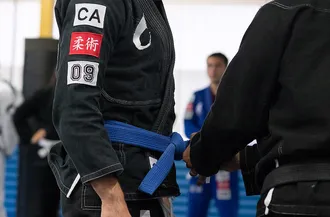
The second big shift usually comes around blue belt, typically 1.5 to 3 years in. By then, you have a functional understanding of all major positions and can hold your own against most training partners.
What keeps people training for decades is that it never fully "clicks." There's always another position to figure out, and the black belts in your gym are still learning too. A black belt is just a white belt who never quit.
How Long Does It Take to Get Good at BJJ?
Depends what "good" means. A rough guide for someone training two or three times a week:
- Surviving a roll with a blue belt: around 6 to 12 months.
- Winning a white belt division: anywhere from 6 to 18 months. Wrestlers and judoka get there faster. Everyone else catches up.
- Blue belt: usually 1.5 to 3 years. Our blue belt timeline covers what coaches look for.
- Black belt: typically 8 to 12 years for a hobbyist. BJ Penn got his in roughly three years, but full-time competitors training twice a day are outliers. For everyone else, the road to a BJJ black belt is closer to a decade of Tuesday nights than a few good years.
The biggest variable is mat time. Three classes a week for two years adds up to around 300 classes. At once a week, that takes six years. Talent and athleticism help, but nobody beats the person who keeps showing up.
Frequently Asked Questions
Is BJJ harder than boxing or wrestling?
BJJ has a longer learning curve than boxing and a similar curve to wrestling. However, BJJ has a much lower physical entry barrier. You don't need explosive speed or cardio to start. Boxing is easier to pick up initially, but all three arts take years to master. The "hardest" one depends on your body type and background.
Can I start BJJ if I'm out of shape?
Absolutely. BJJ is one of the best martial arts for people who aren't currently fit because techniques rely on leverage and positioning, not athleticism. You'll build cardio, strength, and flexibility as you train. Don't wait until you're "in shape." Let BJJ get you there.
How many times a week should a beginner train BJJ?
Twice a week is the minimum to retain what you learn. Three times a week is ideal for steady progress. More than four sessions per week can lead to burnout or overuse injuries for beginners. Recovery matters just as much as mat time.
Will I get hurt as a beginner?
Minor soreness and occasional bruises are normal, especially in the first few weeks as your body adapts. Serious injuries are rare in BJJ compared to striking arts because you can tap out before any technique causes damage. Choosing a gym with a good safety culture and understanding the real injury risks makes a big difference.
Is BJJ hard for older adults (30, 40, 50+)?
Age changes how you train, not whether you can train. Many people start BJJ in their 30s, 40s, and beyond. You may need more recovery time and a focus on technique over intensity, but the art itself is built for longevity. Plenty of practitioners compete and earn black belts well into their 40s and 50s, and plenty more are starting BJJ at 30, 40 or 50 right now.
BJJ is hard, and that's why the confidence it gives you feels earned. Book that trial class and accept that you'll get smashed for a few months. Everyone did. Oss!