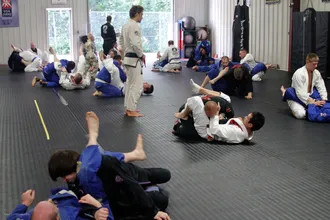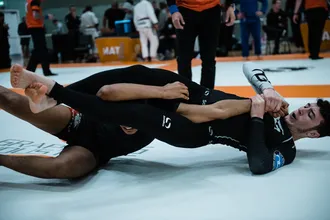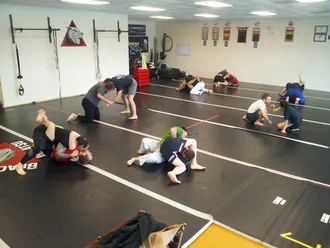
Walk into any gym that's been open ten years and ask how many students have come through the door. Then count the black belts on the wall. The gap between those two numbers is the story of jiu-jitsu.
Nobody keeps official dropout figures, but ask any coach and you'll hear the same thing: most people who start BJJ never make it to blue belt, and a big chunk of the ones who do disappear shortly after. That's anecdotal, but it's anecdotal from just about every academy on the planet.
People rarely quit for one dramatic reason. It's usually a slow pile-up of small ones. Here are the big ones, and what the people who stuck around did differently.
The First Three Months Are Brutal
Your first class is exciting. Your fifth is confusing. Somewhere around week eight you realize you still can't escape side control, you've forgotten every technique from last Tuesday, and the guy who started a month after you just tapped you with a move you've never seen.
This is the most common exit point. BJJ has a long, flat learning curve at the start, and nothing in most adults' lives prepares them to be this bad at something for this long. BJJ is hard to learn for a simple reason: you're learning a new language with your body, and nobody is fluent after two months.
The people who get through this stretch tend to stop measuring themselves against everyone else. They measure against last month. Can you hold closed guard longer? Did you survive mount for 30 seconds instead of 10? That counts.
Getting Smashed Every Night
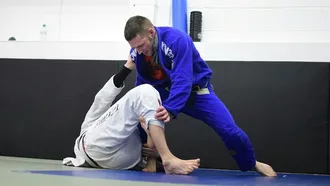
Every gym has one. The spazzy white belt with a wrestling background who goes 100% in every roll. Or the visiting brown belt who treats a 3-minute round with a beginner like an ADCC final. Get matched with them three nights in a row and you start finding reasons to skip class.
Then there's your own ego. Plenty of fit, successful people walk into a gym expecting to be decent quickly. Getting choked by a 60 kg teenager is hard on that self-image. "Check your ego at the door" is printed on half the gym walls in the world for a reason.
What helps:
- Tap early, tap often. Nobody remembers who tapped who in a Tuesday night roll. Your coach will remember you stayed healthy.
- Pick your partners. You're allowed to politely sit out a round with the guy who tries to rip your arm off. Good coaches notice that pattern and deal with it.
- Change the goal. White belts don't need to win rolls. Aim to escape once, or hit one sweep from guard. Win or learn.
Injuries and the Long Layoff
Injury doesn't usually end someone's jiu-jitsu directly. The layoff does. Six weeks off with a cracked rib turns into three months, because by then your routine has gone, the gym feels unfamiliar and you're nervous about walking back in out of shape.
The usual suspects in BJJ are knees (especially from twisting in guard or getting caught in a heel hook), shoulders, fingers from gi grips, and ribs from heavy top pressure. Skin stuff happens too. One bout of ringworm is enough to make some people question the whole thing, so learn how to prevent ringworm and staph before it happens. And yes, a few people quit the day they see their first swollen ear. If that's you, read up on cauliflower ear and buy a pair of ear guards.
If you get hurt, stay connected to the gym. Watch class. Drill what you can. Come to an open mat and work light positional rounds with someone you trust. People who keep their face in the room come back. People who disappear for three months usually don't.
Work, Kids and Money
This is the boring reason, and it's the most common one past white belt. New job, new baby, a move across town, or the monthly fee starts to look expensive next to everything else.
Nobody can fix your schedule for you, but two things help. First, drop the all-or-nothing mindset. Training once a week isn't ideal, but it keeps you in the game, and it beats zero. Our sample BJJ training schedules show how parents, shift workers and 9-to-5 people actually fit it in. Second, look at the gym itself. Plenty of academies run 6am or lunchtime classes, and some offer cheaper twice-a-week memberships.
The Blue Belt Blues
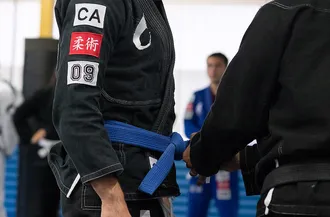
It's such a common pattern that it has its own name. Someone grinds for two years, gets their blue belt, gets whipped down the gauntlet line, posts the photo, and is never seen again.
Why does it happen right after a promotion? A few reasons:
- The goal is gone. For many people, blue belt was the target. Once it's tied around their waist, the motivation that carried them through the white belt years disappears.
- The target on your back. As a white belt, losing to a blue belt is normal. As a fresh blue belt, losing to a big white belt feels like an embarrassment, and suddenly every white belt wants to tap you.
- The long road ahead. You realize purple belt is another two or three years away, and black belt is a decade out. That can feel more depressing than motivating.
- A sense of "enough". Blue belt is a genuinely useful level of skill. Some people decide that's all they wanted.
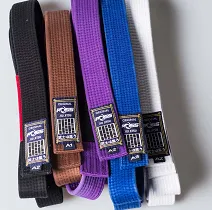
Knowing the blues are coming helps. So does setting a new goal that isn't another belt: enter a tournament, build an actual guard game, or start helping the new white belts. If you're still on your way there, a blue belt usually takes 1.5 to 3 years, and the stripe system gives you smaller milestones to chase along the way.
Bad Gym Culture
Sometimes people don't quit jiu-jitsu. They quit a gym, and never find another one.
Signs of a gym that burns people out: no structure for beginners, a coach who lets anyone go full speed on new students, cliques, pressure to buy the gym's merch, or a loyalty culture where visiting another academy's open mat gets you branded a "creonte" (BJJ slang for a traitor or gym hopper, borrowed from a character in a Brazilian soap opera).
Gym politics are real, but they're not a reason to give up on the sport. Every city has more than one academy. Before you sign up somewhere new, take a trial class, watch how upper belts roll with beginners, and read what other students say. You can find BJJ gyms near you with reviews and class times in one place.
Coming Back After Quitting
Plenty of black belts quit at least once. Six months, two years, sometimes a decade. The gi in the closet still fits (mostly).
Your first week back will feel rough. Your cardio is gone, your timing is off, and you'll gas out in the first round. That's mat rust, and it wears off faster than you think. The technique is still in there somewhere.
- Tell your coach you've been away. They'll pair you sensibly.
- Skip hard rounds for two weeks. Drill and flow roll while your body catches up.
- Don't compare yourself to the old you. You're not starting over. You're just rusty.
A black belt is just a white belt who never quit. In practice it's usually a white belt who quit a couple of times and kept coming back.
Frequently Asked Questions
What percentage of people quit BJJ?
There's no reliable official number. Coaches commonly estimate that most beginners never reach blue belt, and a lot of new blue belts stop soon after promotion. Treat any exact percentage you see online as a guess.
When do most people quit BJJ?
The two big drop-off points are the first three to six months, when the learning curve is steepest, and the months right after getting a blue belt, known as the "blue belt blues."
Is it normal to want to quit BJJ?
Completely. Almost everyone who trains long enough goes through a stretch where they want to stop. Taking a short break, changing your training schedule or setting a new goal often fixes it.
How long does it take to get back into BJJ after a break?
Most people feel their cardio and timing come back within 2 to 6 weeks of regular training. The longer the break, the longer it takes, but technique sticks around better than fitness does.