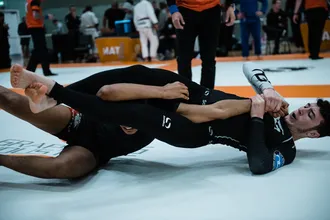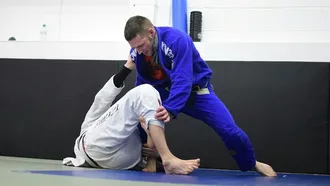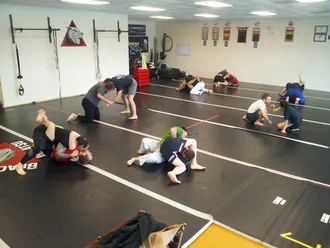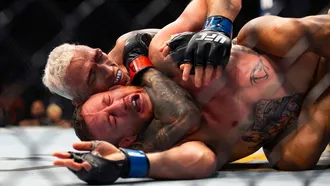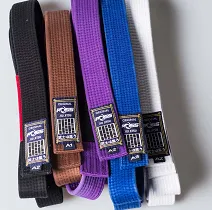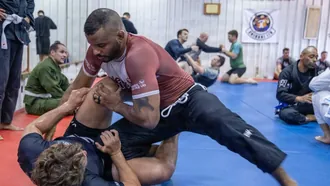
BJJ builds some muscle, mostly in your grip, back, core, hips and neck. It's a great workout for conditioning, and it'll make you functionally strong in a way that surprises people at the gym. What it won't do on its own is make you big. If you want noticeable size, you'll need to lift and eat for it.
Below is how jiu-jitsu changes your body, how many calories a session burns, and how to add strength work without wrecking your training.
Is BJJ a Good Workout?
Yes, and anybody who's survived their first five-minute round knows it. You're pushing, pulling, bridging, gripping and holding your own bodyweight in strange positions, all while someone is trying to choke you. It works your heart and lungs like interval training, and your muscles like a slow, awkward bodyweight circuit.
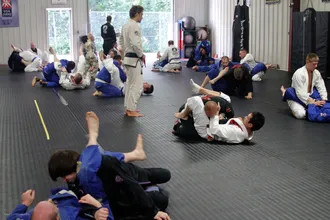
A typical class mixes three intensities: a warm-up, technique drilling (fairly easy), and live rolling (very hard). That combination is why BJJ gets people in shape so quickly. Most beginners find their cardio improves noticeably in the first two or three months, and many lose weight without changing much else. The benefits of BJJ for your heart are a big reason the white belt gas tank doesn't stay empty for long.
Does BJJ get you in shape? Train two or three times a week for six months and you'll be in better shape than most people you know. You'll also be sore in muscles you didn't know existed.
Which Muscles BJJ Builds
- Forearms and grip. Gi grip forearms are a real thing. Holding collars and sleeves for an hour, several times a week, builds crushing grip strength. Training in a BJJ gi works your grip much harder than no-gi.
- Back and lats. Pulling people into your guard, breaking posture and finishing chokes is all pulling work.
- Core. Bridging, shrimping and holding guard hammer your abs, obliques and lower back.
- Hips and glutes. Every escape starts with your hips.
- Neck. The jiu-jitsu neck. Years of being stacked and fighting chokes gives long-time grapplers thick, strong necks.
What BJJ trains less: chest, shoulders and legs in the heavy, loaded way that builds size. You'll get some endurance there, but not much mass.
How Many Calories Does BJJ Burn?
Nobody has measured this precisely for jiu-jitsu, so treat any number you see as an estimate, including ours. The most common way to estimate it is the Compendium of Physical Activities, which gives martial arts a MET value of roughly 5.3 for slow-paced practice and 10.3 for moderate-paced training and sparring. Calories per hour are roughly MET multiplied by your bodyweight in kilograms.
| Bodyweight | Easy drilling (per hour) | Hard rolling (per hour) |
|---|---|---|
| 60 kg (132 lb) | about 320 kcal | about 620 kcal |
| 75 kg (165 lb) | about 400 kcal | about 770 kcal |
| 90 kg (198 lb) | about 480 kcal | about 930 kcal |
| 105 kg (231 lb) | about 560 kcal | about 1,080 kcal |
A real class sits somewhere in between. You might spend 30 minutes drilling and 20 minutes rolling, with plenty of rest between rounds, so for most people a one-hour class lands around 500 to 700 kcal. An open mat where you roll round after round will be at the top end.
Why BJJ Won't Make You Huge
Muscle growth needs progressively heavier load, enough protein and enough calories. BJJ gives you lots of volume but not much heavy load, and it burns a lot of energy. That's why most full-time grapplers look lean and wiry rather than bodybuilder big.
Every gym has the opposite example too: the jacked white belt who looks like he should win every roll and gasses out in 90 seconds. Gym muscle doesn't automatically translate to the mat. And then there's dad strength, the deceptively strong older guy with a bit of a belly who you can't move off you. Grappling strength is about leverage, grip and endurance more than size.
A Simple Strength Plan for BJJ
You don't need to choose between lifting and jiu-jitsu. Two short sessions a week is enough for most hobbyists. Keep it simple, lift on non-BJJ days or after a light class, and stop a couple of reps short of failure so you're not wrecked for training.
| Day A | Day B |
|---|---|
| Squat or goblet squat: 3 x 5 to 8 | Deadlift or trap bar deadlift: 3 x 5 |
| Bench press or push-ups: 3 x 6 to 10 | Overhead press: 3 x 6 to 8 |
| Rows: 3 x 8 to 10 | Pull-ups or towel pull-ups: 3 x max |
| Farmer's carry: 3 x 30 m | Single-leg work (lunges or split squats): 3 x 8 each |
| Plank or dead bug: 3 x 30 to 45 seconds | Neck work (light bridges or band): 2 x 15 |
Towel pull-ups are a grappler favorite. Hang a towel over the bar and grip it like a gi lapel. Your forearms will hate you.
How you fit this around class depends on your week. Most people slot lifting into their BJJ training schedule on rest days or after a light class. Don't stack heavy lifting on top of training BJJ five times a week and expect to recover. And if you're starting BJJ at 30, 40 or 50, strength work is one of the best ways to protect your joints.
Eating for BJJ
If you want to lose fat, BJJ plus a modest calorie deficit works very well. If you want to build muscle, you need to eat more than you burn, and with jiu-jitsu burning several hundred calories a session, that's more food than you might think.
- Aim for around 1.6 to 2.2 g of protein per kg of bodyweight a day if you're lifting and rolling.
- Eat something light 1 to 2 hours before class. Nobody wants to roll with a full stomach, and your partner definitely doesn't want you to.
- Drink water. Rolling in a heavy gi makes you sweat a lot more than you notice.
You don't need to follow the Gracie Diet (unless you want to). Eat mostly real food and enough of it, and let the training do the rest.
Ready to see what it feels like? Find a BJJ gym near you and book a trial class. Bring water.
Frequently Asked Questions
Is BJJ a good workout?
Yes. It combines interval-style cardio with full-body strength endurance. Most people notice big improvements in fitness, grip and core strength within a few months.
How many calories does a BJJ class burn?
It depends on your weight and how hard you roll. Using standard martial arts MET estimates, a typical one-hour class burns somewhere around 500 to 700 kcal for most adults. Treat that as an estimate.
Can BJJ help you lose weight?
Yes. Regular training burns a lot of energy, and many beginners lose weight in their first year. Pairing it with a sensible diet makes the biggest difference.
Should I lift weights if I do BJJ?
Most people benefit from two short strength sessions a week. It improves performance on the mat and helps prevent injuries. Keep the sessions short and don't train to failure before class.