If you're picking your first BJJ tournament in the US, you'll mostly be choosing between six names: IBJJF, NAGA, Grappling Industries, Fuji, AGF and, if you live in the Pacific Northwest, the Revolution. ADCC sits above them as the biggest no-gi event in the world, with Opens and Trials underneath it.
They all use similar scoring, but they feel very different on the day. The IBJJF is strict, expensive and prestigious. NAGA is huge and puts you in divisions by experience. Grappling Industries, Fuji, AGF and the Revolution try to get you more than one match for your money. Here's how they compare, and which one makes sense for a first competition.
IBJJF vs NAGA vs Fuji vs AGF at a Glance
| IBJJF | NAGA | Grappling Industries | Fuji | AGF | Revolution | |
|---|---|---|---|---|---|---|
| Where | Worldwide | US-wide, plus some international | Worldwide, biggest in the US | US-wide | US regional | Puyallup, Washington |
| Gi and no-gi | Both | Both | Both | Both | Both | Both |
| No-gi divisions by | Belt | Experience | Belt | Skill level | Belt | Belt or skill level |
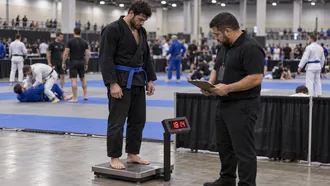
| Weigh-in | Right before first match, in gi | Night before or same day, no gi | Up to an hour before your division, no gi | Up to an hour before your division, no gi | Check event, no gi | Day of event when your bracket is called, in gi |
| Weight allowance | None | 1 lb | None | 2 lb | 1 lb | None listed |
| Matches if you lose first | One and done | Usually one | Round robin, at least two | Double elimination | Double elimination | Consolation match, not guaranteed |
| Best for | Rankings, prestige | Beginners, lots of divisions | Most matches per entry | Mat time | Local experience | PNW competitors |
Rules and formats change, so always check the event page before registering.
IBJJF
The International Brazilian Jiu-Jitsu Federation was founded in 1994 by Carlos Gracie Jr. and runs the events most people mean when they say "the big ones": the World Championship (Worlds or Mundials), the Pans, the Europeans and No-Gi Worlds. Under those sit dozens of opens around the world.
What it's like: professional, organized and strict. You weigh in with your gi on, minutes before your first match, with no allowance. Your gi gets checked for sleeve length and color. Brackets are single elimination, so if you lose your first match, your day is over. Entries are usually the most expensive of the bunch, and you'll need an IBJJF membership to compete.
Why do it: the IBJJF is the ruleset the sport is built around and the one that carries the most weight on a competition record. If you want to say you medaled at an IBJJF open, there's no substitute. The IBJJF point system is also what most other tournaments copy, so learning it pays off everywhere.
Watch out for: the weigh-in. Most IBJJF horror stories are about a gi that was heavier than someone thought. Know your IBJJF weight class before you register, not on the day.
NAGA
The North American Grappling Association has been running tournaments since the mid-1990s and puts on some of the biggest events in the country, often with hundreds or thousands of competitors in one venue. NAGA is famous for its swords, but the official prize for Expert winners, and for purple, brown and black belt winners in the gi, is a championship belt. Kids champions get one too. You'll see both hanging on gym walls all over the US.
What it's like: big, busy and long. Expect a full day at the venue. Gi divisions follow IBJJF-style rules, while no-gi uses NAGA's own scoring. You weigh in without a gi, either the night before or the morning of the event, with a 1 lb allowance.
The big difference: no-gi divisions are split by experience, not belt:
- Novice: under 6 months of training (white belts only).
- Beginner: 6 months to 2 years.
- Intermediate: 2 to 5 years. Blue belts have to enter at least Intermediate.
- Expert: 5 years or more, and mandatory for purple, brown and black belts.
That system makes NAGA one of the best places to compete very early, because a three-month white belt can be matched with other three-month white belts. It also gives the sport its favorite villain: the sandbagger, the guy with two years of high school wrestling entering novice no-gi. It happens, it's annoying, and you'll still learn more from losing to him than from not entering.
Grappling Industries
Grappling Industries runs gi and no-gi tournaments all over the US and Canada, and it's one of the few promotions you'll also find regularly in Australia, the UK and across Europe. If you see a tournament poster at your gym that isn't IBJJF or NAGA, there's a good chance it's this one.
What it's like: the points mirror the IBJJF, but there are no advantages, and a solid submission attempt that spills out of bounds can still score 2. Every adult match is 5 minutes, whatever your belt. You weigh in without the gi, any time up to an hour before your division, and if you're doing gi and no-gi on the same day you only weigh in once. There's no allowance, though. Miss weight and you're disqualified, with no move up and no refund. Divisions are based on your belt, and experienced wrestlers, judoka and pro MMA fighters have to enter at blue belt level or above, so the sandbagger has fewer places to hide.
The big difference: the round robin. Instead of a bracket, most divisions are small groups where everyone fights everyone. A division of three gets you two matches, a division of five gets you four, and bigger divisions split into groups with a final at the end. Brackets are fully random, so you might end up rolling with your own teammate. Absolutes are the exception, and run as single elimination.
Why do it: four matches for one entry fee is hard to beat. By the third one the adrenaline dump has worn off enough that you'll actually remember what happened. The full scoring, match lengths and legal techniques by belt are in our Grappling Industries rules breakdown.
Fuji
Fuji BJJ runs tournaments across the US with a big focus on giving competitors value. Its brackets are double elimination, so losing your first match doesn't mean packing your bag and heading for the parking lot.
What it's like: friendly and well run. Scoring mirrors the IBJJF. You weigh in up to an hour before your division starts, with a 2 lb allowance. The gi comes off for the scale. No-gi divisions go by skill level instead of belt: Beginner (up to a four-stripe white belt), Intermediate (up to a four-stripe purple belt) and Expert (anyone, and the only adult division where heel hooks are legal). If your bracket is empty, Fuji merges you into a neighboring division rather than hand you a gold medal for showing up.
Why do it: mat time. If you're paying an entry fee, getting two or three matches is worth far more than one, especially for a first tournament where the first match is mostly adrenaline.
AGF
The American Grappling Federation runs regional gi and no-gi tournaments across the US. It has age brackets from tiny kids all the way to an Executive division for over-50s, and adult divisions by belt from white to black.
What it's like: local and relaxed compared with the IBJJF. You weigh in without the gi, with a 1 lb allowance. Brackets are double elimination until the final, so losing your first match doesn't end your day, and three-person brackets are run as a round robin.
Why do it: it's often the closest event to home, and you'll be competing against people from gyms down the road. That makes AGF a great first step before you travel to bigger tournaments.
The Revolution
The Revolution is a tournament series run by Leap out of Puyallup, Washington, and it's past its 50th event, so it's no fly-by-night operation. Leap uses the IBJJF rules as its guide for points, advantages and penalties. The format is single elimination with a consolation match for anyone who loses their first match. Leap says it will make every reasonable effort to get you that second match, but it isn't guaranteed, and a consolation match can be up to a minute shorter than a regular one.
Weigh-ins are on the day, when your bracket is called. Adults weigh in wearing the full gi, belt included, or dressed to compete for no-gi, and if you're doing both you weigh in twice. Come in over your registered weight and you can be disqualified with no refund, so use the check scale when you arrive.
Why do it: if you train in the Pacific Northwest, it's on your doorstep, and the consolation match gives you a shot at a second match even if your first one goes sideways.
ADCC Opens and Trials
ADCC (Abu Dhabi Combat Club) runs the most prestigious no-gi tournament in the world. The World Championships happen every two years and are invite or qualify only. Most of us will only ever enter an ADCC Open or Trials event, which are open to everyone.
What's different: ADCC rules give no positive points in the first half of a match, only negative points for stalling and other fouls. Points start in the second half, and pulling guard costs you a point. Weight classes are wider too, with 11 kg jumps between men's divisions at the Worlds.
Mat time: ADCC Opens are generous. A two-person bracket is best of three, a three-person bracket is a full round robin, and anything bigger is double elimination, so one loss caps you at bronze but doesn't send you home.
Why do it: if you're a no-gi grappler who likes wrestling and leg locks, ADCC rules reward exactly that. For a first tournament it can be a lot, so most people do a few local no-gi events first.
Which One Should You Do First?
For most people, the best first tournament is whichever well-run one is closest to home and gives you more than one match. In practice that usually means:
- Brand new (under six months): a NAGA novice no-gi division, a Grappling Industries white belt division, or a local Fuji event.
- Six months to a year at white belt: Grappling Industries, Fuji, AGF or the Revolution, where losing once usually doesn't end your day.
- Wanting a proper test: an IBJJF open. Go once you know the rules cold and you're comfortable with the weigh-in.
- No-gi only: NAGA first, then an ADCC Open.
If you're still wondering how long to train before your first BJJ competition, the answer is usually less time than you think. Once you've picked an event, start preparing for your first BJJ competition six to eight weeks out.
To see what's coming up, browse BJJ tournaments in the United States, or search near you. There's even a page for BJJ tournaments in Las Vegas, where several organizations run events each year.
Frequently Asked Questions
Is NAGA or IBJJF better?
Neither is better. IBJJF carries more prestige and has stricter rules. NAGA is more beginner friendly, with experience-based divisions and a more forgiving weigh-in. Many competitors do both.
Is Fuji BJJ an IBJJF event?
No. Fuji is an independent organization. Its scoring closely follows the IBJJF, but its weigh-ins and bracket formats are different.
What does NAGA stand for?
North American Grappling Association.
What does ADCC stand for?
Abu Dhabi Combat Club, named after the club in Abu Dhabi where the event started.
Do you get a sword at NAGA?
Swords are part of NAGA folklore, and plenty of them hang on gym walls, but NAGA's official prize for Expert winners and for purple, brown and black belt gi winners is a championship belt. Kids champions get a belt too. Whether swords are on offer depends on the event, so check before you start clearing wall space.
How much does a BJJ tournament cost?
It varies a lot by organization and how early you register. IBJJF events are usually the most expensive. Early registration is almost always cheaper, and extra divisions (like gi and no-gi on the same day) cost extra.