Description
June 7,2026 10 AM USA Pacific Time
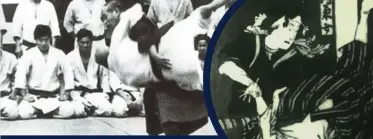
Empower your mind and body through the knowledge of the old. Join our webinar in finding out the origins of Kodokan Nage Waza through searching old Densho and looking at the old Kata dating back to the 1600's
Our Webinar Includes:
- History of Jujutsu leading to Judo
- Origin of Waza
- Pictures of old Densho ( Scrolls)
- Knowledge and understanding of the waza
Everyone registered will receive a Zoom invitation June 6, 2026
About Lee Masters
Lee Masters holds the rank of Menkyo Kaiden in Tenjin Shinyo Ryu Jujutsu, the license of full transmission in this classical Japanese jujutsu tradition. He trained for nearly three decades under his father, Paul Masters (Shike of Tenyokai International, the first Western recipient of Menkyo Kaiden), and traveled multiple times to Japan to train directly with the late Kubota Toshihiro Sensei, the school's headmaster. He currently leads the Swedish Shibu of Tenyokai International from Bosjökloster, Sweden, and co-teaches at the Tenyokai International hombu dojo in Essex, England.
With more than 36 years of martial arts experience — including a foundation in Shotokan karate and Tenshin Shinyo Ryu before specializing in Tenjin Shinyo Ryu — Masters brings unusual depth to his teaching. He is also a practicing osteopath (D.O., M.GOsC) with over 24 years of clinical experience, applying anatomical expertise to the school's study of vital points, joint mechanics, and the precise body-use principles preserved in its kata. He is currently writing a historical book on Tenjin Shinyo Ryu drawn from primary-source scrolls.
About Tenjin Shinyo Ryu and its connection to judo
Tenjin Shinyo Ryu is one of the koryū (classical) Japanese jujutsu traditions, founded by Iso Mataemon Masatari in the 1830s through the synthesis of two earlier schools — Yōshin-ryū and Shin no Shintō-ryū. Its syllabus combines atemi-waza (striking), nage-waza (throwing), torae-waza (immobilization), and shime-waza (strangulation), transmitted through kata that have been preserved continuously since the school's formation. By the mid-19th century, Iso served as jujutsu instructor to the Tokugawa shogunate and his school was the most widely practiced jujutsu system of its era.
The school holds a foundational place in the history of judo. Jigoro Kano, founder of Kodokan judo, was a student of Tenjin Shinyo Ryu — beginning under Fukuda Hachinosuke and continuing under Iso Masatomo. Together with Kitō-ryū, the source of Kano's principal throwing material, Tenjin Shinyo Ryu formed the technical and philosophical foundation from which Kodokan judo was synthesized in 1882. Core judo techniques including seoi nage, harai goshi, and osoto gari trace lineage to this school, and elements of Kime no kata and Itsutsu no kata preserve material drawn directly from Tenjin Shinyo Ryu.